
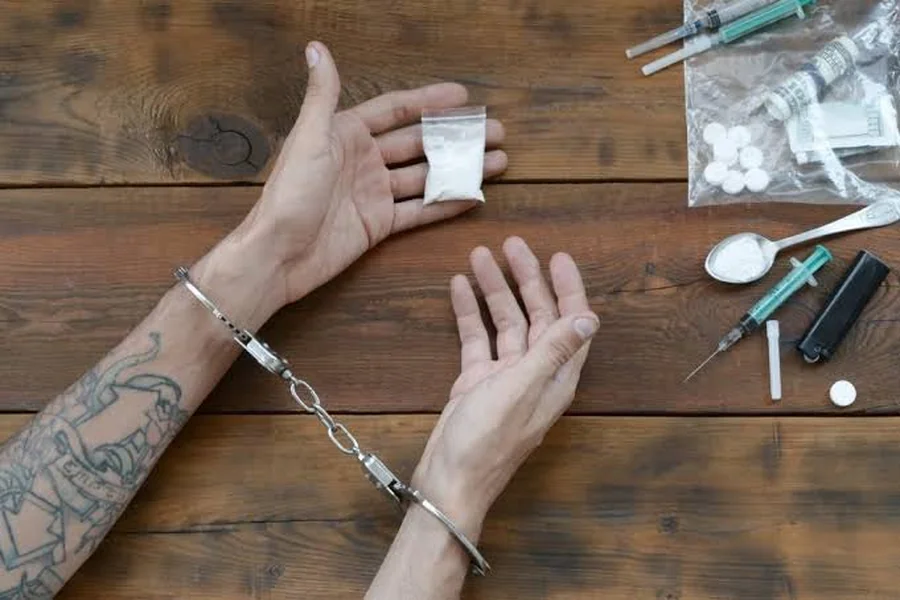
A drug accusation can turn an ordinary day into a significant legal problem. A possession charge is stressful enough. A distribution charge might up the ante even further. The good news is that an arrest is not a conviction. The government hasn’t made its case yet. A drug lawyer can see the facts, look at the proof and defend your rights. The sooner you get a lawyer involved, the more time your attorney will have to develop your defense.
Possession and Distribution Are Different Charges
Drug possession is not the same as drug distribution. “Possession” usually signifies that you have an unlawful restricted substance in your possession. That control can be direct, like pills in your pocket. It can also be claimed when narcotics are found in a place under your control. Distribution generally means to deliver or convey a controlled substance to another individual. Depending on the evidence, the authorities might additionally charge you with selling, distributing, or trafficking drugs. The restrictions differ slightly from region to region within the United States. The charge may also depend on the kind and amount of substance. That makes a difference. Someone charged with mere possession might have a substantially different case than someone charged with distributing drugs.
What Does the Prosecution Need to Prove?
An arrest doesn’t mean guilt. The prosecution needs to offer evidence for each needed element of the charge. This might include proof that the substance was unlawful and that the person charged with possession knew it was. Distribution situations may demand more. The authorities may try to prove that a person meant to transfer narcotics to another person. It could be messages, money, packaging, statements or the amount of drugs seized. But data needs context. A lot of cash doesn’t tell the complete story. Nor do a bunch of little packets. The defense attorney analyzes how all of the evidence ties together.
Was the Search Legal?
This is where a drug case can get intriguing. Police searches must comply with constitutional and state regulations. The rules are different depending on where the search happened and why officers did it. A lawyer may inquire if the authorities have a warrant, probable cause, consent or other valid grounds. For example, cops might stop a vehicle and then search it. The defense can ask what transpired before the search. Did authorities have probable cause to search? Was the search outside the bounds of the law? Did someone really consent? If the police violated your rights, your attorney may contest the evidence.
Where you keep your drugs can be important
One big concern can be where the police located the drugs. Three people are supposed to be in a house. Drugs found in one bedroom by officers. The prosecution can’t just assume they had them all in there. The same thing can happen with a shared car. The lawyer can inquire who owned the narcotics, who had access to the area, and who knew the drugs were there. This is especially true regarding constructive possession claims. The authorities may allege someone was in control of the location where the drugs were found. That is yet to be proven.
What About Fees for Distribution?
Distribution cases usually involve more than just the drugs. Police can use:
- Text messaging or other correspondence
- Interviews recorded on tape
- Cash found during search
- Scales / Packaging
- Other statements
- Video surveillance
- The amount of drugs involved .
- Allegations of Transferring Drugs
None of these facts should be considered in isolation. “Where did the evidence come from? Does it really support the charge? A lawyer can look at these things. For example, you don’t have to be a drug dealer to have cash. Small bag ownership does not necessarily mean dispersal. The government has to link the dots to the charged offense.
Can you challenge the evidence in a drug case?
Yes, occasionally. A drug lawyer can look into how police identified, gathered, kept and tested the narcotic. This method can potentially call the evidence into question. The defense can challenge the chain of custody. It’s only a record of who handled the evidence and where it ended up. Laboratory tests can be important, too. The prosecution may have to establish what the substance was. Defense can contest those flaws if testing or handling raises severe concerns. The point is not to make trouble where there is none. It is to test the evidence fairly.
What if the cops ask you questions?
When people are arrested, they typically feel pressure to justify themselves. I can understand that. You think, ‘If I tell them what really happened, they’ll let me go.’ Don’t count on it. You have the right to an attorney present during questioning. When you ask for a lawyer, let your lawyer tell you about more questions. In some circumstances a statement can help the defense. It can also be quite damaging to the case. So it’s wise to acquire legal guidance before you discuss the facts.
A Lawyer Can See Beyond the Arrest
More than the police report makes a good defense. Your lawyer can look at body-camera footage, dash-camera video, search warrants, lab reports, witness statements, phone records, photographs and other evidence. Sometimes the story states one thing, the video shows another. That’s why careful case review is important. A Drug Lawyer can also help explain what your charge entails, what sanctions may be applied and what defenses are available to you.
Possible Outcomes Depends on the Case
Not every drug case ends the same way. Depending on the circumstances, a case can be dropped, reduced, resolved by a plea bargain or taken to trial. The outcome can vary based on the drug used, the amount, the claimed conduct, prior convictions and the law of the state in which the case was brought. Don’t measure your situation by what happened to a friend or relative. Similar charges can have completely different facts. Your lawyer should look at your case on its own merits.
The Value of Experience
When you are charged with a crime, you want a seasoned, skilled attorney. You need someone who knows the pressure that comes with a severe allegation. David Benowitz is an attorney at Platinum Criminal Defense Law Firm who represents individuals facing criminal accusations around the United States. Mr. Benowitz is AV rated by Martindale-Hubbell and awarded a perfect 10 on AVVO. He is a member of the National College of DUI Defense. He is also on the faculty of the Trial Advocacy Workshop at Harvard Law School. If you are charged with a drug crime, you should take it seriously from day one. Good legal work includes asking the tough questions, examining the evidence and preserving your rights.
Protect Your Defense Don’t Delay
Drug possession and distribution accusations can have devastating implications. Waiting can increase the stress in an already difficult situation. Hold onto your court paperwork. Do not destroy or change evidence. Don’t talk about the case to anyone who doesn’t need to know. Then talk to an experienced lawyer. You don’t have to solve the full case by yourself. Your first job is to safeguard your rights and acquire good legal guidance.
FAQs
- Difference between possession and distribution of drugs ?
Short answer: Possession usually implies you have illicit drugs on you and distribution means you gave them to someone else.
Detail : Legal definitions vary between state and federal law . Distribution accusations may include selling, delivering or intending to supply drugs. The charges and possible punishments might depend on the facts and the amount involved.
- Can a drug lawyer contest evidence obtained during a search?
Short answer: Yes, if the search or seizure was unlawful.
Detail: A lawyer can look into why police stopped you and why they searched you, your car or your home. If the cops did not have a legal reason, the defense might seek the court to exclude evidence. The judge decides if the evidence is permitted.
- I had no drugs on me. Can I be prosecuted with possession?
Short answer: Yes, it depends upon the facts.
Detail: Prosecutors can make the case for constructive possession when drugs are located in an area under a person’s control. Being adjacent to drugs does not mean you had possession. The government still has to demonstrate knowing control of the material.
- What can police utilize as evidence in a drug distribution case?
Short answer: Police can use a ton of evidence.
Detail: This can include messages, recorded calls, cash, packing, surveillance footage, witness testimony and the quantity of drugs seized. A lawyer can look at whether the evidence really proves distribution, and whether the cops got it legitimately.
- What to do if you are charged with a drug offense?
Short answer: Stand up for your rights and get help from a criminal defense lawyer.
Detail: Do not discuss the facts with the police without legal advice. Save your court papers. Follow all court directions. A lawyer can look at the evidence, explain your options and create a defense from the specific facts of your case.